The Gap Isn't What You Think
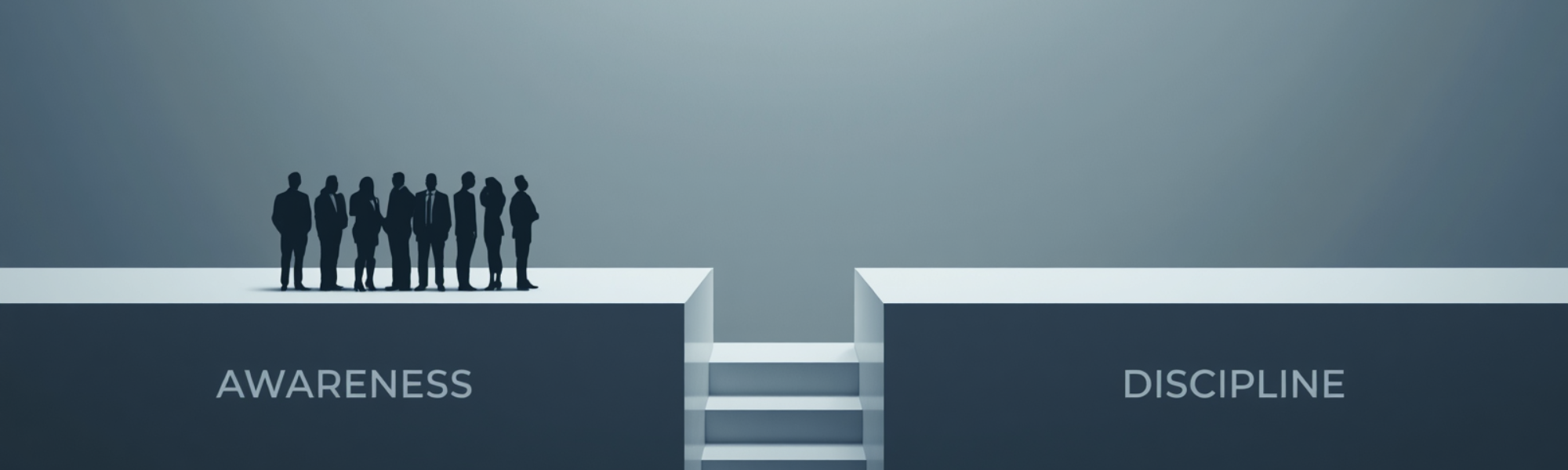
Most leadership teams don't have a people problem. They have a leadership discipline problem with people.
In The People Dividend, I pointed to a tension I've seen repeatedly:
Organizations already know that people matter. They say it. They believe it.
But there's a gap—not in awareness, but in execution.
That gap rarely announces itself. It shows up in subtle ways. Important conversations get shortened or avoided. Alignment is assumed instead of tested. Decisions move forward with unresolved ambiguity.
On the surface, everything appears to be working. Until it doesn't.
Over time, the cost compounds. Strategies drift. Priorities compete. Teams operate with different interpretations of the same plan.
Performance becomes inconsistent—not because people lack capability—but because the leadership system isn't producing enough clarity.
This is where most organizations misdiagnose the issue.
They respond with new initiatives, new programs, and new messaging. But the constraint isn't effort.
It's discipline at the point of decision.
Calm Authority is that discipline.
The willingness to slow down—precisely where it matters—and ask: What problem are we actually solving? Where are we misaligned, even if it's uncomfortable to say? What are we assuming that hasn't been tested?
That's where the People Dividend is created. Not in philosophy. In how leaders think—together—when the stakes are real.
The organizations that get this right don't feel faster. They make fewer expensive mistakes. And that difference compounds.
If you're operating at a level where decisions carry more weight, alignment is harder, and the cost of being slightly wrong is increasing—this is the work.
I'm opening a few conversations with executive teams to improve decision quality, alignment, and leadership discipline where it's breaking down.
No frameworks. No generic programs. Just focused work on how your team operates under pressure.
Featured Articles



The People Dividend Podcast
Opening authenticity in organizations allows us to bring more of who we are to what we do. Discover how to create an open, trusting, and fun workplace.