

Latency, Not Rejection: Understanding Silence from Senior Leaders
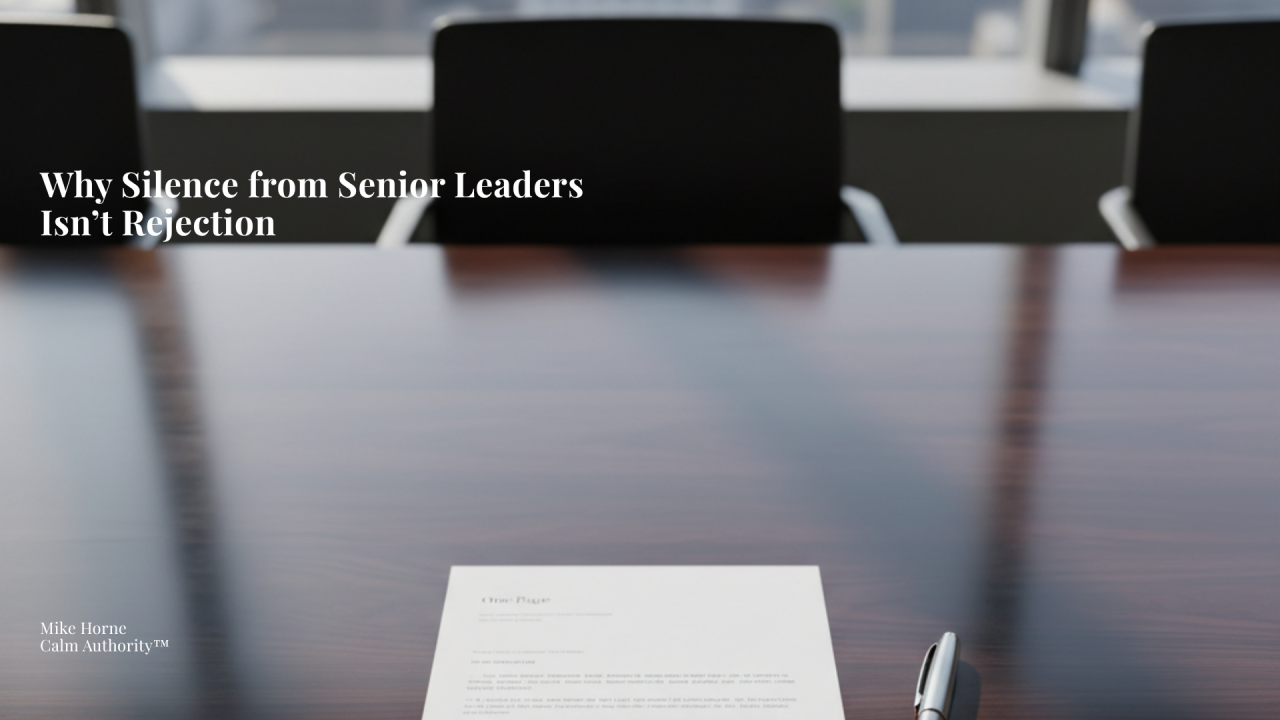
You send a clear proposal to leadership. Then, nothing. Days turn into weeks. That silence can feel personal. But at the executive level, it rarely is. Most of the time, what you are experiencing is latency, an ordinary delay in how real organizations operate.
Understanding the difference between rejection and latency empowers you to navigate complex processes and drive authentic change in your organization. A proposal rarely sits in just one head. It moves through busy calendars, governance gates, and finance reviews.
Instead of waiting in the dark, here are four practical strategies to help you guide your work through these pivotal moments:
Name the owner. Put accountability directly on the page. If no obvious owner exists, identify the correct function and invite them to sponsor it. Clear accountability collapses ambiguity.
Lead with the decision. Open with a single sentence stating the exact question the first live meeting must answer. Make the ask obvious.
Prepare a conversion note. Bring one simple page to your meeting. Include one decision, three short bullets of evidence, and one clear next step with a date.
Give a hard constraint. Executives make choices when a tradeoff is forced by a dollar amount, a headcount impact, or a closing window.
Adapt your expectations to your environment. Small teams might signal back in a few days, while midsize to large enterprises naturally take weeks due to established budget and board cycles. Design your approach for your organization.
Transitions and delays are an inevitable part of work. Read silence as a signal of organizational timing, not your worth. Make your work accountable, decision-first, and constrained.
How do you handle latency in your leadership journey?
#Leadership #ExecutiveCommunication #OrganizationalGrowth
Featured Articles


The People Dividend Podcast
Opening authenticity in organizations allows us to bring more of who we are to what we do. Discover how to create an open, trusting, and fun workplace.


.png)