The Five Minutes After the Meeting
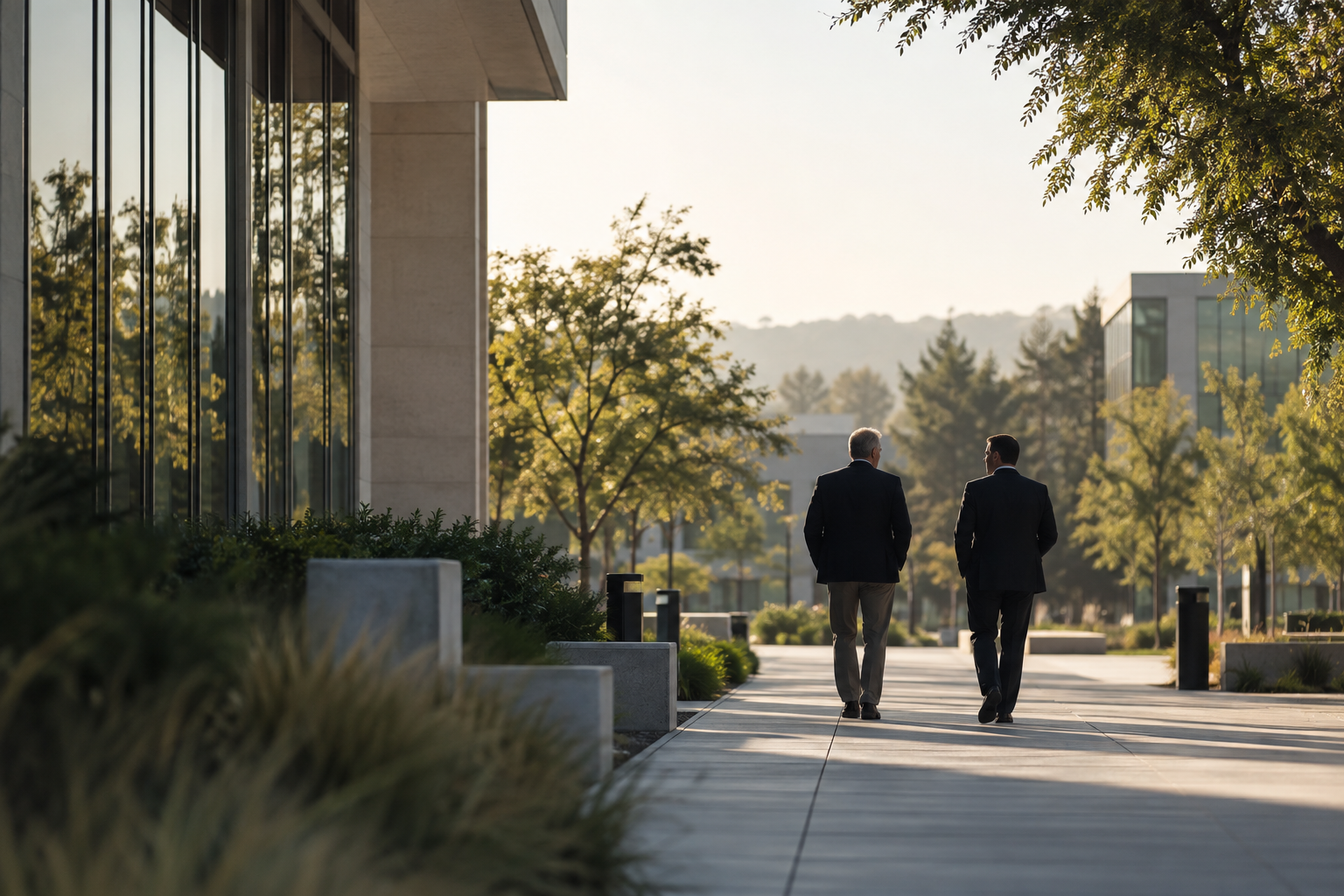
Years ago, I worked with an executive who thought he was about to lose his job. I was relatively new to the organization. I knew there was tension around him. He had been largely absent for a couple of weeks, and people had begun asking me where he was.
Then one day, we walked together across the corporate campus. He was accomplished and experienced. None of that seemed to matter much at that moment. He was nervous. He wanted my perspective. And underneath everything he said was a very simple question.
What do I do?
I liked him. I admired him. And I wasn't going to give him the safe answer. I told him to talk about anything other than his performance.
I wasn't suggesting that he avoid accountability. I had spent years advising executives, and one thing I had learned was that once a conversation acquires a certain frame, almost anything can be made to fit inside it.
People can twist things.
You explain one decision and now you're defending another. You clarify what happened and the clarification becomes evidence of something else. Before long, you're no longer having a conversation. You're building a case against a case you didn't know you were making.
Sometimes more explanation doesn't create more understanding. It just creates more material.
I don't remember how long we walked that day or my exact words beyond that piece of advice. What I remember is the walk. There was no agenda, no conference table, no presentation, and no one at the head of the room. Just two people walking and talking about something that mattered.
I've been thinking lately about how often the important conversation happens after the meeting. You know the moment. The meeting ends, laptops close, people gather their things, and someone catches your eye and says, "Do you have a minute?"
And suddenly the conversation changes. The person who had little to say in the meeting has plenty to say now. The disagreement that couldn't quite find its way into the room becomes clear. Someone admits a doubt. Someone asks the question they didn't want to ask in front of everyone else.
Sometimes the five minutes after the meeting tell us more than the hour that preceded them.
We spend a great deal of time trying to make meetings better. Better agendas, better facilitation, better technology, clearer decisions and action items. All useful.
But perhaps the problem isn't always the meeting.
Perhaps it's the room.
Rooms have structures, even when we don't acknowledge them. Someone called the meeting. Someone has more authority. Someone knows more of the history. Someone is evaluating someone else. Everyone is reading the room while the room is quietly reading them. We know who the captain is, and that changes what gets said.
Walking does something different. There is no head of the table when two people are walking beside each other. We look ahead as much as we look at one another. Silence doesn't seem quite so uncomfortable. We can wander a little in the conversation because we're wandering a little in space.
Maybe that's why some of the best conversations of my career haven't happened where they were scheduled to happen. They happened walking back to an office, in a hallway, over coffee, or standing in a parking lot when both of us should have left ten minutes earlier.
The formal conversation creates one kind of truth. The five minutes afterward can create another.
The obvious question is how we get people to say in the meeting what they're saying afterward.
I'm not sure that's the right question. It assumes the meeting is the place where everything important ought to happen. Maybe it isn't.
Maybe we should pay more attention to the spaces around our formal structures, like the unscheduled conversation, the person who lingers, the colleague who walks alongside us, the moment when someone finally feels able to say, "Here's what I'm really thinking."
That executive and I eventually finished our walk. I don't remember where. I do remember that for a little while, titles mattered less. Process mattered less. There were simply two people trying to make sense of a difficult situation.
We put enormous effort into what happens in the meeting. Maybe we should pay more attention to the walk afterward.
Featured Articles


The People Dividend Podcast
Opening authenticity in organizations allows us to bring more of who we are to what we do. Discover how to create an open, trusting, and fun workplace.